
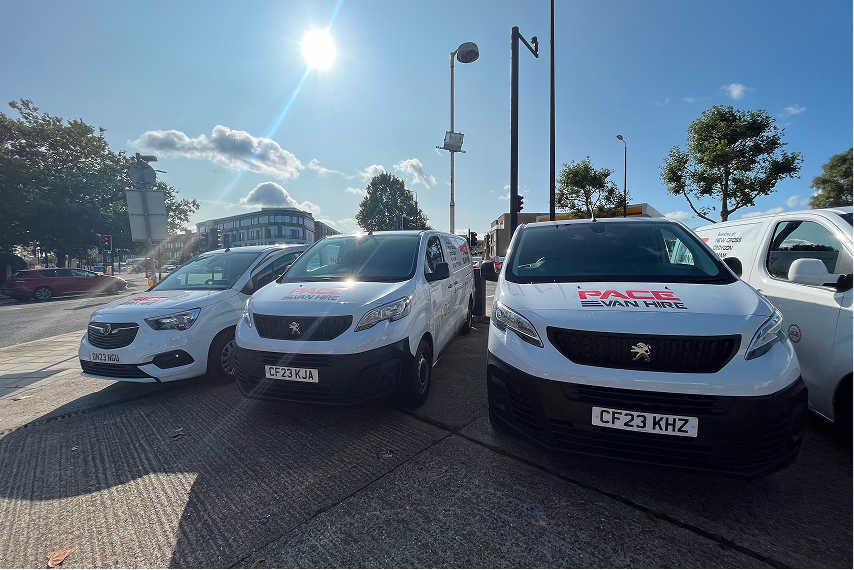
Running a fleet of vans has never been simple, but at the start of 2026 it feels more uncertain than ever.
I speak daily to tradespeople, SMEs, fleet managers, and public sector organisations, and while every business is different, the pressures they’re facing are remarkably similar. Costs are harder to predict, finance is harder to access, and committing to long-term decisions feels riskier than it did even a few years ago.
In this article, I want to share what we’re seeing on the ground at Pace Van Hire, explain the economic trends affecting fleet decisions in 2026, and offer some practical advice to help businesses stay flexible and in control.
The Big Picture: What’s Changing in the Van Market?
The biggest shift I’ve noticed is that businesses are no longer planning fleets with confidence about what the next three to five years will look like.
High interest rates have made hire purchase and lease deals far more expensive, and lenders have tightened up on credit scoring. That’s pushing many sole traders, startups, and even established businesses away from vehicle ownership altogether. Finance that might have been approved a few years ago now often isn’t.
At the same time, the overall cost of running vans has risen. Fuel remains volatile, insurance costs are unpredictable, and repairs are more expensive and slower than they used to be. All of this puts pressure on cashflow, particularly for smaller businesses.
The Result?
More companies are choosing flexibility over ownership. We’re seeing a clear move towards short-term and flexible van hire, not because businesses don’t want to own vehicles, but because they want to protect cash and avoid long-term risk.
Repair Delays, Parts Costs & the Hidden Cost of Downtime
One Of The Most Overlooked Costs In Fleet Management Right Now Is Downtime.
Parts inflation has eased slightly compared to the worst of the pandemic, but we’re still nowhere near pre-2020 levels. Certain components – particularly DPF systems and modern sensors – remain extremely expensive. Even more challenging is the unpredictability of repair lead times.
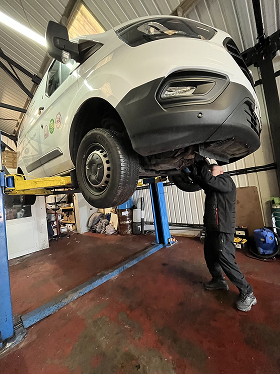
To give a real example, as I’m writing this, one of our Peugeot Experts has been sitting with a main dealer since the 7th of October 2025 with no confirmed completion date. During that time, we’re still paying tax, insurance, and absorbing depreciation on a vehicle that can’t earn its keep.
A large operator might be able to absorb that. A small business with two or three vans often can’t. They end up paying for a replacement vehicle while still carrying the cost of the original one.
That’s where fixed-cost hire can make a real difference, because downtime risk is removed from the equation.
Fuel, Insurance & Day-to-Day Running Costs
Fuel costs are still a major concern for many businesses, particularly those covering high mileages. While efficiency matters, most customers I speak to aren’t trying to chase the “perfect” vehicle anymore – they’re trying to reduce exposure to unpredictable costs.
Insurance is another major issue. Pricing has been volatile, and while rates have softened slightly in recent months, they could just as easily rise again. Claims inflation is a real problem. Minor bumps and scrapes that once cost a few thousand pounds are now regularly turning into five-figure repair bills.
Tradespeople and sole traders feel this pressure more sharply because there’s less room for error. Larger fleets can spread risk; smaller businesses often can’t.
That’s why having clear, predictable monthly vehicle costs has become more important than squeezing out marginal savings.
Vehicle Finance, Leasing & the Reality of Ownership
More customers are telling us the same thing: buying vans has become harder.
Access to finance is more restricted, and even when it’s available, the cost of borrowing has increased significantly. This has changed how people think about ownership versus hire.
One mistake I see regularly is businesses focusing purely on the upfront price of a vehicle. Depreciation is often written off without being fully accounted for, and downtime, repairs, and admin time are rarely factored in properly.
Residual values have also become extremely uncertain. When repair times are unpredictable and market conditions change quickly, calculating the true cost of ownership becomes almost impossible.
The cheapest option on paper is very rarely the cheapest option in reality.
Supply Chain Issues & Vehicle Availability
Although supply chains have improved compared to a couple of years ago, lead times for new vans are still inconsistent. Certain models and specifications remain difficult to source, which delays fleet replacements and expansion plans.
For many businesses, this has pushed them towards hire simply because they can’t afford to wait. Van hire acts as a buffer when vehicles are delayed, allowing operations to continue without disruption.
This applies just as much to public sector organisations as it does to private businesses. Access to vehicles, when you need them, is often more important than how they’re funded.
Changing Customer Behaviour: How Businesses Are Adapting
Customer behaviour has shifted noticeably.
We’re seeing more businesses that used to own 100% of their fleet now keeping part of it on hire. That allows them to scale up or down without committing capital or locking themselves into long-term agreements.
We’ve also seen an increase in seasonal and specialist operators coming to us after the withdrawal of services like Zip Van in central and Greater London. Florists, events companies, and businesses with fluctuating demand need reliable access to vehicles without long-term risk.
The common theme is flexibility.
Businesses don’t want to overcommit when the economic outlook is unclear.
Electric Vans & Sustainability: Confidence Has Stalled
Sustainability remains important, but confidence in electric vans has definitely stalled.
A lot of businesses are stepping back, particularly with the proposed tax-per-mile introduction planned for 2028. Even though details are still unclear, the uncertainty alone is enough to put people off. Costs may be low initially, but most businesses expect them to rise over time.
The removal of grants for smaller electric vans has also reduced incentives, and many electric models still aren’t fit for purpose for all commercial uses. Range, charging infrastructure, and future running costs remain big concerns.
What’s telling is that even local authorities hiring vans are not universally moving to electric, and there’s no mandate forcing them to do so. Private businesses are asking a fair question: if councils aren’t convinced, why should they be?
Right now, uncertainty is doing more damage to electric van confidence than cost alone.
Expert Advice: How to Future-Proof Your Fleet in 2026
If I had to give one piece of advice to businesses planning their fleet for 2026, it would be this: avoid over-commitment.
The world of business is changing too quickly to lock yourself into long-term decisions that assume stability. Keeping fleets lean, using hire to cover peaks, and maintaining the ability to scale quickly has proven essential.
Running a smaller core fleet and adding vehicles only when required can significantly reduce costs without compromising service. It also frees up time and headspace by removing admin, maintenance, and unexpected repair issues.
Long-term hire makes sense when vehicle downtime costs you money, when cashflow visibility matters more than ownership, or when your business is growing but you’re unsure at what pace.
The Biggest Mistake Businesses Are Making Right Now
The biggest mistake I see is assuming the next three years will look like the last three.
Over-commitment to ownership, long leases, or ageing vehicles leaves businesses exposed when costs rise or conditions change.
Flexibility isn’t a luxury anymore – it’s a form of risk management.
Looking Ahead: The 12–18 Month Outlook
Unless there’s a sharp and clear change in government policy, I expect demand for electric vans in the commercial sector to remain subdued. At the same time, I believe we’ll see continued growth in demand for short-term and flexible vehicle access.
Managing fleets is certainly getting harder. Insurance costs remain volatile, repair costs are high, and uncertainty is likely to continue. But businesses that stay adaptable and focus on real-world costs rather than headline prices will be better placed to cope.
At Pace Van Hire, our role is to help customers stay mobile without taking on unnecessary risk.
In an uncertain economy, flexibility is often the most valuable asset a business can have.
For more industry and economic insights visit our blog or follow us on Facebook.

About the Author: Louis Verrico
Louis Verrico is the third-generation leader at Pace Van Hire, a trusted family-run business rooted in South London since the 1950s. Since joining the company in 2008, Louis has been instrumental in transforming the business from its car dealership origins into a premier provider of long-term and affordable van hire across New Cross, Croydon, and Eltham. Under his leadership, the company has expanded through three branches, focusing on quality service, innovation, and growth while staying true to its family values and customer-first ethos
Share this post

Contact Pace Van Hire
Give us a call on 020 7277 9853 with any questions and we’ll help you hire a van that’s right for you.
Or if you’d prefer to just get started, you can book online and we’ll give you a call back to confirm.