
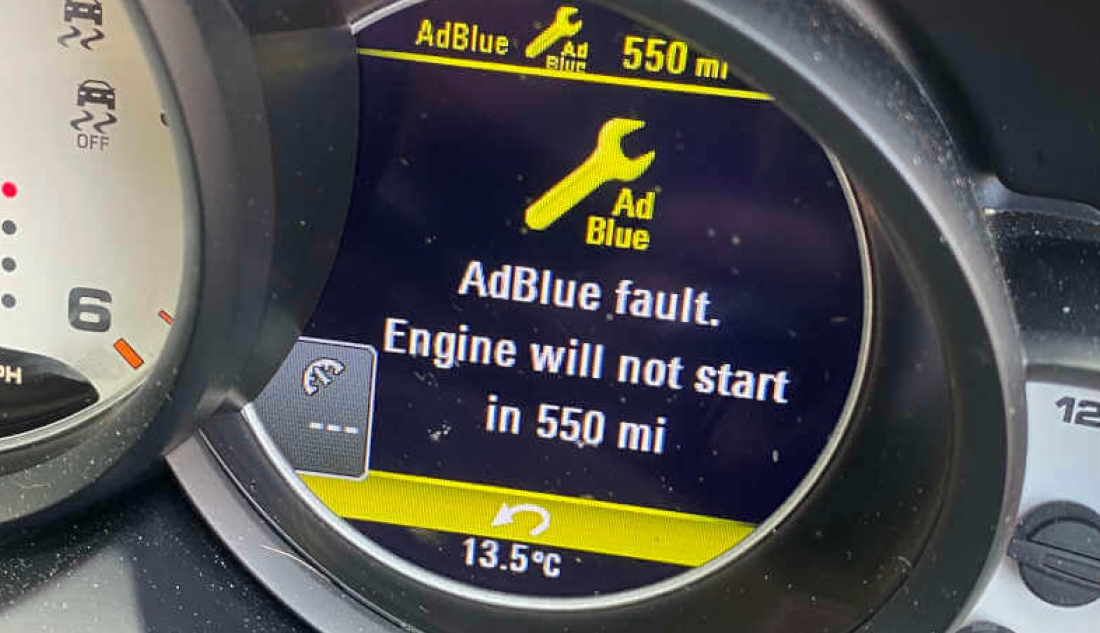
If you run a modern diesel van, chances are you’ve heard of AdBlue.
In theory, it’s a simple system. AdBlue helps reduce harmful emissions and allows diesel vehicles to meet increasingly strict environmental regulations. In reality, AdBlue problems have become one of the more common emissions-related issues we see affecting modern vans.
At Pace Van Hire, we operate and maintain a large fleet of commercial vehicles, so we see these faults regularly. While AdBlue systems are extremely effective at lowering emissions, they’ve also added another layer of complexity to diesel vehicles that many operators don’t fully appreciate until something goes wrong. They have solved one problem, but created others, so to speak!
In this guide, I’ll explain what AdBlue is, the most common AdBlue problems we see, typical repair costs, and what van owners can do to avoid expensive downtime.
What is AdBlue?
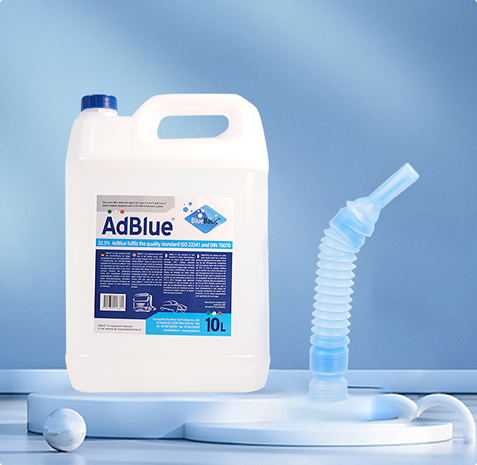
AdBlue is a urea-based fluid used in modern diesel vehicles fitted with SCR (Selective Catalytic Reduction) systems.
It’s stored in a separate tank from the diesel fuel and injected into the exhaust system, where it helps convert harmful nitrogen oxide gases (NOx) into harmless nitrogen and water vapour. The technology was introduced to help manufacturers meet stricter Euro emissions regulations.
One important thing many drivers don’t realise is that AdBlue isn’t optional. Modern diesel vans are designed around the system and cannot operate correctly without it.
Why Are AdBlue Problems Becoming More Common?
- Pumps
- Injectors
- Sensors
- Wiring
- Control modules
- Pipework
Each of these components can potentially fail. The result is that today’s diesel vans are significantly more complex than the vehicles many businesses were operating ten or fifteen years ago.
As emissions standards have become stricter, the number of potential failure points has increased too.
The Most Common AdBlue Problems We See
One of the challenges with modern AdBlue systems is that several different faults can produce very similar symptoms. What starts as a simple AdBlue warning light can sometimes develop into reduced engine performance, a vehicle that won’t start, or expensive repair bills if left unresolved.
In our experience, the most common AdBlue problems affecting diesel vans include injector failures, AdBlue pump failures, NOx sensor faults, crystallisation issues, electrical faults and contaminated AdBlue fluid. Understanding the warning signs early can often prevent a relatively minor issue from becoming a much larger repair.
1. AdBlue Injector Failure
If I had to pick the most common AdBlue-related component failure we come across, it would probably be the injector.
The injector’s job is to spray AdBlue into the exhaust system at precisely the right rate. Over time, injectors can become blocked or fail due to:
- Heat exposure
- Contamination
- Crystallisation
When this happens, the system can’t dose AdBlue correctly, triggering warning lights and fault codes. But, the good news is that injector repairs are often among the cheaper AdBlue fixes.
Typically, an injector replacement might cost around £100-£200 for the part, plus labour depending on the vehicle.
2. AdBlue Crystallisation Issues
As far as technical issues go, one of the biggest affecting AdBlue systems is crystallisation.
Because AdBlue is made from water and urea, exposure to air, temperature fluctuations and evaporation can create hard white crystal deposits. We commonly see these deposits forming around injectors, pipes and sensors. Obviously, this is a nuisance.
Once crystallisation starts, it can restrict flow through the system and trigger faults elsewhere.
In many cases, what initially appears to be a major AdBlue problem starts with a relatively small leak that allows fluid to crystallise over time.
Surprisingly, some of the most common issues we see aren’t caused by the AdBlue system itself.
Modern vans rely heavily on sensors throughout the emissions system, many of which are mounted underneath the vehicle.
That leaves them exposed to:
- Road salt
- Water ingress
- Debris
- Corrosion
- Rodent damage
We regularly encounter wiring faults caused by rodents chewing cables underneath vehicles.
Fortunately, if diagnosed early, these faults are often relatively straightforward and inexpensive to repair.
4. AdBlue Pump Failure
The most expensive AdBlue repair we typically see involves the pump. On many modern vans, the pump is integrated into the AdBlue tank assembly.
Unfortunately, that often means replacing the entire tank rather than simply replacing the failed pump. For example, on some vehicles the replacement tank assembly alone can cost well over £1,500 before labour is added. This is why accurate diagnosis is so important.
5. Contaminated AdBlue Fluid
While it’s less common than injector or sensor faults, contaminated AdBlue can still cause problems.
AdBlue has to meet very specific quality standards to work correctly. If dirt, water, fuel or other contaminants enter the AdBlue tank, the SCR system may struggle to operate as intended.
Potential symptoms can include things like:
- AdBlue warning lights
- Fault codes
- Reduced engine performance
- Increased emissions
- Difficulty completing emissions system checks
In some cases, contaminated AdBlue can contribute to blockages within the system or accelerate wear on components such as injectors and pumps.
The good news is that this is one of the more preventable AdBlue problems. Using quality AdBlue from reputable suppliers, keeping the filler area clean when topping up, and avoiding contamination during storage can all help reduce the risk.
Like many emissions-related faults, what starts as a relatively small issue can become a much more expensive repair if it’s ignored. That’s why we always recommend investigating warning lights and fault codes early, before they lead to bigger problems elsewhere in the system.
Why Diagnosing AdBlue Problems Is So Important
One of the biggest mistakes we see is assuming the most expensive component is at fault. A warning light doesn’t automatically mean you need a new AdBlue tank.
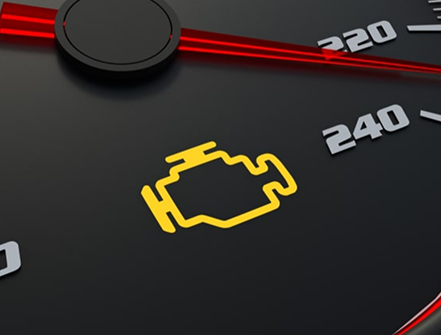
In reality, the fault could be:
- AdBlue warning lights
- Fault codes
- Reduced engine performance
- Increased emissions
- Difficulty completing emissions system checks
The challenge is that several different faults can trigger very similar symptoms. In our experience, the diagnosis often takes longer than the actual repair.
A proper diagnostic inspection can often save hundreds or even thousands of pounds by identifying the root cause rather than simply replacing parts.
What Frustrates Van Owners Most About AdBlue Problems?
The biggest frustration isn’t usually the repair itself. It’s the fact that the van often appears to be driving perfectly normally.
A small sensor fault or AdBlue issue can trigger:
- Dashboard warning lights
- Reduced engine power
- Countdown restart warnings
- Non-start conditions
Eventually, many modern vans will refuse to restart altogether if the system believes emissions controls are no longer functioning correctly.
For business owners, that’s incredibly frustrating. The vehicle may seem perfectly usable, but electronically it’s effectively grounded.
Can You Ignore AdBlue Warning Lights?
In my experience, this is one of the biggest misunderstandings drivers have. Many people assume AdBlue warnings can be ignored for a few weeks until the next service.
Modern vans don’t work like that.
Today’s emissions systems are heavily sensor-driven. A relatively small issue can quickly escalate into:
- Limp mode
- Failed regenerations
- Non-start conditions
- Expensive repair bills
The earlier a fault is investigated, the cheaper it usually is to resolve.
How Much Do AdBlue Problems Cost Businesses?
The answer varies enormously depending on the fault. A relatively simple injector issue might only cost a few hundred pounds to repair.
A failed AdBlue tank assembly could run into four figures. For fleet operators, the real cost is often downtime.
At Pace Van Hire, we estimate AdBlue and emissions-related issues cost our business at least £5,000 per year in repairs and associated maintenance.
That’s despite having experienced teams and established maintenance procedures in place.
For smaller operators with only one or two vehicles, a single unexpected AdBlue repair can have a significant financial impact.
Are AdBlue Systems Changing How Businesses
Think About Diesel Vans?
Not dramatically, at least not yet.
The reality is many businesses still need diesel vans because they’re often the most practical solution.
Diesel vehicles continue to offer advantages for:
- Payload capacity
- Towing
- Long-distance driving
- Fuel economy
- Operational flexibility
If your business regularly carries heavy loads or covers significant mileage, diesel remains difficult to replace. That said, modern emissions systems have definitely increased awareness around maintenance and vehicle selection.
Businesses are becoming much more conscious that modern diesel vans are significantly more complex than older models.
My Advice for Diesel Van Owners
The good news is that modern vans are actually very good at telling you when something is wrong. Don’t ignore that warning.
We strongly recommend:
- Servicing diesel vans every 10,000 miles
- Investigating warning lights immediately
- Carrying out regular diagnostic checks
- Keeping AdBlue levels topped up
- Addressing small faults before they escalate
A simple diagnostic scan can often reveal:
- AdBlue faults
- Sensor failures
- Regeneration history
- DPF soot loading levels
Catching these issues early is almost always cheaper than waiting until the vehicle enters limp mode or refuses to start.
IN Summary...
Frequently Asked Questions
The reality is that the warning light doesn’t always mean you’re about to break down. In many cases, it’s the vehicle’s way of telling you that something in the emissions system needs attention before it becomes a bigger problem.
Warning lights can be triggered by problems like low AdBlue levels, and AdBlue injector fault, sensor issue, Crystallisation within the system, wiring damage, or a pump problem.
Modern vans are packed with sensors that constantly monitor emissions performance. If the system detects that AdBlue isn’t being delivered correctly, or that emissions aren’t being controlled as expected, it will usually trigger a warning light.
Please don’t ignore it.
A warning light today might be a relatively inexpensive sensor or injector issue. Leave it too long and you could find yourself dealing with restricted engine power, a vehicle that won’t restart, or a much larger repair bill.
The good news is that modern diagnostic equipment can usually pinpoint the cause quickly, allowing the problem to be fixed before it escalates.
Yes, and this is one of the things that surprises many van owners.
Most modern diesel vans are designed to comply with strict emissions regulations. If the vehicle believes the AdBlue system isn’t functioning correctly, it will often begin a countdown process.
At first, you may only see a warning message on the dashboard. If the fault isn’t resolved, the vehicle may eventually refuse to restart once the engine has been switched off.
From a driver’s perspective, this can be incredibly frustrating because the van may still seem to drive normally right up until that point.
We’ve seen situations where a relatively minor fault, such as a sensor issue or AdBlue injector problem, has resulted in a van becoming effectively unusable because the system can no longer verify that emissions controls are working correctly.
That’s why we always recommend investigating AdBlue warnings as soon as they appear

About the Author:
Louis Verrico
CEO of Pace Van Hire
Louis Verrico is the third-generation leader at Pace Van Hire, a trusted family-run business rooted in South London since the 1950s. Since joining the company in 2008, Louis has been instrumental in transforming the business from its car dealership origins into a premier provider of long-term and affordable van hire across New Cross, Croydon, and Eltham. Under his leadership, the company has expanded through three branches, focusing on quality service, innovation, and growth while staying true to its family values and customer-first ethos

Speak to our team.
If you are looking to hire a van long term and want to know more about our business contract hire packages, don’t hesitate to get in touch. You shouldn’t settle for second best when it comes to keeping your company operating efficiently. Give us a call on 020 7277 9853 or email info@pacevanhire.com for a swift response.